
Radiation Treatment
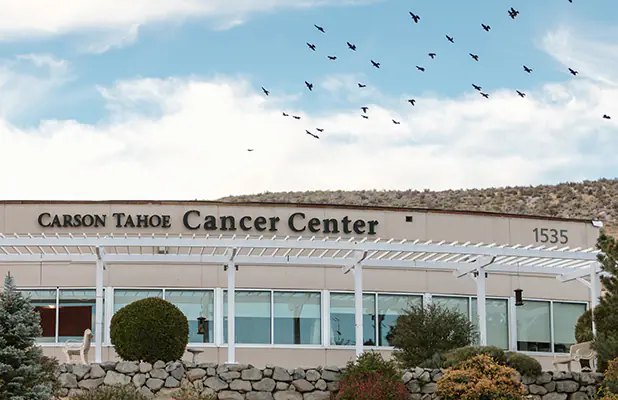
Carson Tahoe Radiation Oncology Associates provides advanced cancer treatment in Carson City, Nevada using highly targeted radiation to treat a wide range of cancers. As a partner of Carson Tahoe Cancer Services their team delivers precise, evidence-based care tailored to each patient’s diagnosis and treatment plan.
How Radiation Therapy Works
Radiation therapy uses high-energy beams to damage the DNA of cancer cells, preventing them from growing and dividing. Over time, this causes tumors to shrink and, in some cases, can eliminate cancer entirely.
Treatment is carefully planned to maximize effectiveness while minimizing exposure to surrounding healthy tissue. Radiation therapy may be used as a primary treatment or in combination with other therapies such as surgery, chemotherapy, or immunotherapy. In some cases, it is also used to relieve symptoms and improve quality of life.
Targeted Radiation Therapy
Radiation therapy is a localized treatment, meaning it is delivered directly to the tumor site. Advanced planning and imaging allow radiation to be precisely focused on the cancer, limiting impact to nearby healthy structures.
This targeted approach supports more effective treatment with fewer side effects and is customized based on the type, location, and stage of cancer. Each patient’s treatment plan is individualized to ensure optimal outcomes.
Advanced Technology & Expert Care
Carson Tahoe Radiation Oncology Associates is equipped with a state-of-the-art linear accelerator capable of delivering highly precise radiation therapy within sub millimeter accuracy. This advanced technology enables clinicians to target tumors with exceptional precision while preserving healthy tissue.
Care is provided by experienced radiation oncologists and a multidisciplinary team with decades of combined expertise.